
Top 5 Non-touristy Things to Do in Ubud

Updated: Aug 12

Non-touristy things to do in Ubud include quiet rice-field walks, heron-watching in Petulu, low-key temple visits, and hands-on cultural workshops. While Ubud is often known for its crowded Monkey Forest and rice terraces, the true essence of Bali’s cultural heart lies in these untouched experiences. Compiled by the local Ramu Kitchen team, this guide showcases the authentic and community-focused treasures that lie under wraps—perfect for travelers who want to explore Ubud at a local pace, often without the typical ticket prices of major attractions.
1. Nature & Adventure: Campuhan Ridge Walk & Petulu Herons
These spots are a great way to experience Ubud for free, so you can save your travel budget for more meaningful local connections instead of paying for admission.
Campuhan Ridge Walk
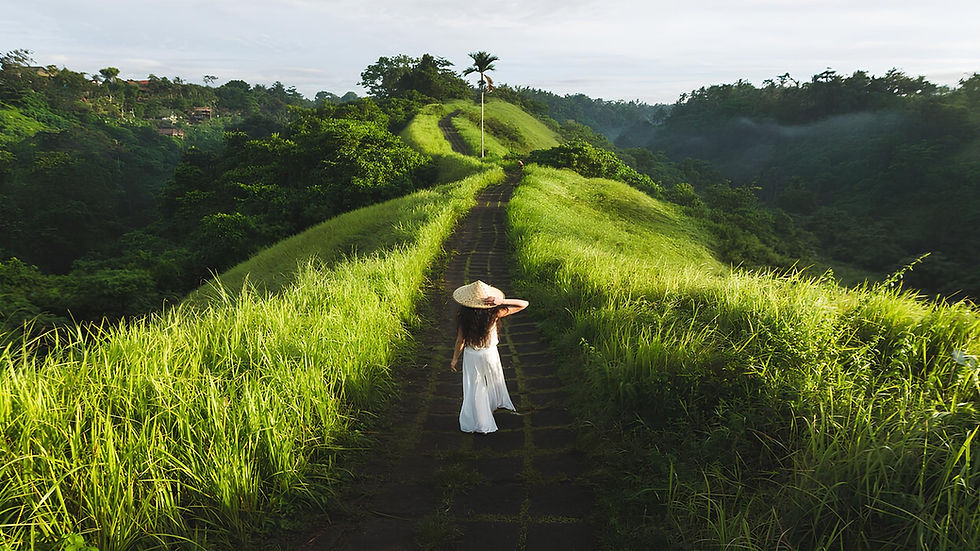
Instead of weaving through Ubud's traffic, take this 2-kilometer ridge path for a dose of fresh air and sweeping valley views. It’s a peaceful way to see the greener side of the town, especially if you catch it during the early morning mist or the soft glow of late afternoon.
Address: Jl. Raya Campuhan, Sayan, Ubud
Hours: Open 24 hours (best at dawn or late afternoon)
Contact: No official contact (public path)
Price: Free
Heron Birdwatching, Petulu Village

Witness thousands of herons returning to their nests at dusk. Protected as a sanctuary since the 1980s, this village offers a quiet, fascinating glimpse into local nature.
Address: Petulu Village (10-15 mins from Ubud center)
Best Time: 5:30 PM – 6:30 PM
Contact: No official number
Price: Free (donations appreciated)
Pro-Tip (2026): While the best time to see them is generally between 5:30 PM and 6:30 PM, visitors note that arriving by 5:00 PM allows you to witness the start of the spectacle. If you are visiting at the end of the year, you may catch the peak breeding season, which offers an even more impressive display.
2. Quiet Temples & Cultural Sites: Goa Gajah, Pura Gunung Lebah, Puri Saren Palace
If you are lucky enough to visit during a local ceremony, respectfully ask if you may attend; many villages welcome visitors who dress appropriately in a sarong and sash.
Goa Gajah (Elephant Cave)

An 11th-century archaeological site featuring a unique cave entrance and lush temple gardens. In recognition of its cultural significance, Goa Gajah has been listed as a tentative UNESCO World Heritage site since 1995 (source: Gianyar Cultural Heritage Board).
Address: Jl. Raya Goa Gajah, Bedulu, Gianyar
Hours: 8:00 AM - 6:00 PM daily
Contact: +62 361 295675
Price: IDR 50,000 (sarong rental available)
Pura Gunung Lebah

Tucked away where two rivers meet, this ancient temple is incredibly serene, the kind of place where you can actually find a bit of quiet and escape the noise for a while.
Address: Jl. Raya Campuhan, Ubud
Hours: 8:00 AM - 6:00 PM
Contact: No official contact
Price: Free (donations appreciated; sarong required)
Pro-Tip (2026): If you really want to see the place come alive, try visiting during Budha Kliwon Sinta: a holy day that happens every 210 days on the Balinese calendar. You’ll find the temple beautifully decorated, and it’s a rare, honest look at Balinese temple life that most visitors usually miss.
Puri Saren Palace (Ubud Royal Palace)

The historical heart of Ubud is where you can actually slow down and admire the intricate Balinese architecture that’s been standing here for generations.
Address: Jl. Raya Ubud No. 8, Ubud
Hours: 8:00 AM - 7:00 PM daily
Contact: +62 361 975059
Price: Free; dance performances: IDR 80,000-100,000
3. Hidden-Gem Restaurants: Ramu Kitchen & Ramen Dining Kazumi
Ramu Kitchen Ubud

Offering a ‘forest-to-table’ concept, they have successfully translated this deeply into their design and dishes. Located on the rooftop of Titik Dua Hotel Ubud, you will feel hidden away from Ubud's busy streets. Try the 'Dumpling Chilli Crab' and 'Lawar Banana Blossom.'
Address: Jl. Cok Rai Pudak No. 48, Peliatan, Ubud
Hours: 3:00 PM - 11:00 PM (daily)
Contact: +62 812-3795-3489 | ramukitchen@gmail.com
Price: Main dishes: IDR 90,000-200,000
Ramen Dining Kazumi

You'll find this place right on the corner of Goutama Selatan Street. It’s a local favorite when you’re craving actual Japanese flavors, especially their signature char-siu pork that makes the whole bowl worth it!
Address: Jl. Goutama Sel. No. 25, Ubud
Hours: 12:00 PM - 9:30 PM daily
Contact: +62 361 9080777
Price: Ramen dishes: IDR 95,000-175,000
4. Hands-On Cultural Experiences: Batik, Dance, Gamelan, Pottery, & Cooking Classes
Batik Classes (Widya’s & Nyoman Warta)

Learn the intricate art of wax-resist dyeing from local masters.
Widya’s Batik: Jl. Sri Wedari 82A, Tegallantang Ubud | 9:30 AM - 1:00 PM | IDR 350,000-400,000 | +62 812 3835 2054
Nyoman Warta Batik: Jl. Gootama No. 12, Ubud | By appointment | IDR 400,000 | +62 812-3902-9804
Performance Arts (ARMA Museum & The Bali Culture Workshop)

Move beyond watching to learning the traditional rhythms and movements of Bali.
ARMA Museum: Jl. Raya Pengosekan | 9:00 AM - 6:00 PM | +62 361 976659
Classes: IDR 350,000-895,000
The Bali Culture Workshop: Jalan Raya Ubud, Petulu | By appointment | +62 813-3834-4699
Classes: IDR 300,000-400,000
Serayu Pottery Class

Create your own ceramic pieces with a professional instructor in a relaxing environment. The Serayu Pottery studio notes that a standard stoneware throwing session requires at least 10–14 days for the firing process to ensure food-grade durability (source: Serayu Pottery studio.)studio.
Address: Jalan Gunung Sari No. 3, Banjar Ambengan, Peliatan, Ubud
Hours: 9:00 AM and 5:00 PM
Contact: +62 8135-3022-235 | info@serayubali.com
Price: Starts from IDR 305,000 (depending on class type and material)
Pro-Tip (2026): Choose the Stoneware Throwing class if you want to create food-grade tableware, like mugs or bowls, to take home. If you are only in Bali for a short trip and cannot wait for the firing process (10–14 days), they also offer an experience-only session. Always book in advance as slots fill up quickly.
Jeding Bali Cooking Class

Learn to craft local cuisine and master traditional spice pastes, often including a market tour.
Address: Jl. Raya Laplapan Banjar Laplapan No. 18, Ubud
Hours: Morning: 8:30 AM - 1:30 PM | Afternoon: 2:30 PM - 7:30 PM
Contact: +62 813-3971-5569 | info@jedingbali.com
Price: IDR 350,000/Person (Minimum 2 Persons)
5. Sound Healing: Serendipity Sounds, Pyramids of Chi, & Heartspace Bali
Pyramids of Chi

Built specifically for sound healing and deep meditation, this place offers daily sessions if you're looking to really unplug. It’s quite an experience if you're into that kind of deep resonance work.
Address: Jl. Kelebang Moding No. 22, Ubud
Price: IDR 220,000 – 350,000 per session
Serendipity Sounds & Heartspace Bali

If you prefer something a bit smaller and more personal, these spots are great for sound baths and healing work. They’re popular with people around here who want a quiet, community-vibe space to just relax and reset.
General Information: Best for those looking for a low-key, community-focused environment.
Price: Starts from IDR 350,000 (depending on the specific session selected)
FAQs
What is the nicest area in Ubud?
The most desirable areas in Ubud include:
Central Ubud: The area around Jalan Raya Ubud and the Palace offers convenient access to restaurants, shops, and cultural attractions.
Penestanan: A quieter artist village just west of central Ubud with beautiful rice field views and a bohemian atmosphere.
Nyuh Kuning: A peaceful, traditional village south of the Monkey Forest with authentic Balinese charm.
Campuhan Ridge: The area around the famous ridge walk offers stunning valley views and a more secluded feel while still being close to town.
Tegallalang: Located north of Ubud, known for its spectacular terraced rice fields and more rural setting.
How walkable is Ubud?
Ubud's central area is pretty much walkable, with its main road spanning around 2-3 kilometers. Although there are several factors that need to be considered, they are:
Challenges:
Some areas have narrow or nonexistent sidewalks
Some parts of the walks have craggy terrain, especially near river valleys
In the town center, traffic congestion is quite normal at certain hours
Tips:
The main streets (Jalan Raya Ubud, Monkey Forest Road) and the surroundings of the central area are quite easy to walk.
Always bring water and an umbrella/raincoat on hand.
Is Grab legal in Ubud?
Although Grab (and similar ride-hailing apps) are legal in Bali, in some areas they face strong resistance from the local drivers (who are not part of the ride-hailing services), and many spots in Ubud have “no ride-hailing pickups” signs.
You might find some drivers cancelling rides to/from certain locations due to this condition, and many will ask you to meet them away from certain spots. Try to arrange pickups from less exposed locations and be as subtle as you can when being picked up or dropped off.
How to get around in Ubud?
Transportation options include:
Walking: Practical for central areas
Scooter rental: $5-10 USD per day—international driving license is mandatory
Bicycle rental: $2-3 USD per day
Local taxis: Cost slightly more than ride-hailing
Private drivers: $40-100 USD for a full day
Shuttle services
Ride-hailing apps: Use with caution, as mentioned above
Most accommodations can arrange transportation at a higher rate.
What is the best non-touristy alternative to Tegallalang rice terraces?
Try the rice fields in Penestanan or Kajeng instead. You still get the green scenery and the subak irrigation stuff, but without the crowds and the tourist trap vibe. It’s just much more low-key.
What to do in Ubud for free?
Aside from the spots we've already covered, there’s plenty to do that won't cost you a rupiah:
Browse local handicrafts and produce in the Ubud traditional market
Art gallery hopping: Most of the local galleries here are happy to let you walk around and browse for free.
Cultural performances: If you wander past the local dance schools, you can often catch the dancers practicing; it’s honestly just as good as a formal show.
Free meditation sessions: A few of the spiritual centers around town host open sessions if you’re looking to clear your head.
Sunset viewpoints: There are plenty of quiet spots around the jungle edges where you can just sit and watch the sun go down.
Monkey Forest Road: You don’t need to pay an entrance fee just to enjoy the vibe of the street and do a bit of window shopping.
Many activities require only a small donation or token entrance fee (under $1-2 USD).
Please note that prices and operational hours may have changed since our last update. Confirming the latest information when planning your visit is highly recommended, especially for classes and sessions that require advance booking.
Conclusion

There are still a lot of things that are not on this list for non-touristy things to do in Ubud, a charming town located in the heart of Bali, Indonesia. Overall, Ubud is a treasure trove of unique experiences that invite travelers to connect deeply with the local community and the stunning environment that surrounds them, making it a truly unforgettable destination.
Ubud rewards travelers willing to step past the crowds—its ridge walks, village temples, and local workshops offer cultural depth without the queues. Whether seeking sound healing, traditional batik, or a quiet meal, these alternatives provide an authentic experience in the heart of Bali.
Looking for rare, one-of-a-kind Ubud experiences? If you're interested in exclusive artistic venues or private ceremonies, explore our sister guide on Unique Things to Do in Ubud You Won't Find Anywhere Else.
Note: This guide is regularly updated; all details were verified per July 2026 to ensure accuracy for your upcoming travels.


Comments